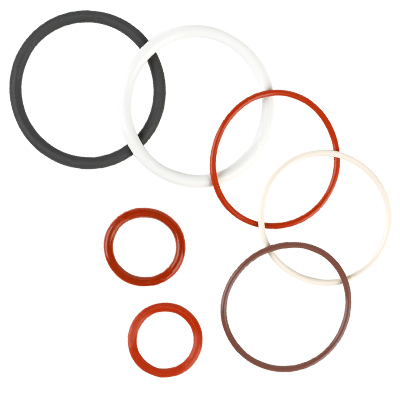
FDA and Class VI O-Rings
O-rings that are FDA and Class VI Certified are Important for Validation
These Rubber Fab o-rings are FDA Compliant for use in food applications and Class VI tested for pharmaceutical applications. They come with a certification for each and are perfect for validation and food processing, where these certifications are important. Let us help you find the o-ring that is right for your process. Our portfolio includes FDA compliant o-rings that meet stringent food-contact requirements as well as FDA Class VI O-Rings verified for biocompatibility. For users needing Class VI o-rings for pharmaceuticals, we provide documentation to support validation.
O-ring applications are categorized by the type of motion that is happening between the two surfaces. Static applications involve sealing between two parts that do not move. Dynamic sealing refers to applications where the two parts are moving in relation to each other. The following drawings depict static and dynamic sealing. Used in situations involving reciprocating, rotating or oscillating machine movement relative to the o-ring, dynamic seal performance may be substantially affected by a number of operating environmental factors. Such factors include: seal swell in fluids, surface finish of metal parts, lubrication, system pressure, thermal cycling, o-ring squeeze, o-ring stretch and friction. As many of these factors are interrelated, it is important to consider ALL of them in dynamic sealing situations. Rubber Fab highly recommends pretesting in specific dynamic applications to determine acceptable life cycle.
Industry standards, certifications, and differences for medical and pharmaceutical use
Specific medical and pharmaceutical industry standards and certifications relevant to FDA and Class VI O-Rings include FDA 21 CFR regulations for food-contact materials, USP Class VI biocompatibility testing for plastics and elastomers, and often ISO 10993 for biological evaluation of medical devices. Many applications also reference 3-A Sanitary Standards for hygienic design in food and dairy, and may require documentation such as material traceability, lot certification, and conformity statements. Our FDA compliant o-rings meet applicable FDA 21 CFR criteria for indirect food additives, while FDA Class VI O-Rings undergo USP Class VI testing for systemic toxicity, intracutaneous reactivity, and implantation effects, providing assurance for Class VI o-rings for pharmaceuticals and bioprocessing environments.
Medical-grade o-rings may differ in material composition and performance from standard FDA and Class VI offerings by incorporating higher-purity formulations, reduced extractables, enhanced sterilization resistance, and stricter process controls. For example, medical-grade silicone, EPDM, FKM, and FFKM compounds may be engineered to minimize leachables, withstand repeated sterilization cycles (steam-in-place, autoclave, gamma, or EtO), and maintain mechanical properties under broader temperature and chemical exposure ranges. While FDA compliant o-rings focus on food-contact safety and cleanliness, and FDA Class VI O-Rings emphasize biocompatibility, medical-grade variants often add further testing (such as ISO 10993 panels), tighter particulate control, and validated cleaning or packaging protocols to meet hospital, device, and pharmaceutical manufacturing needs. This distinction helps ensure that Class VI o-rings for pharmaceuticals address both regulatory expectations and performance demands in critical processes.
For those seeking more information on USP Class VI o-rings, resources include the United States Pharmacopeia (USP) compendia for Class VI testing guidelines, manufacturer technical datasheets, and validation packages. Rubber Fab provides documentation for FDA Class VI O-Rings, including test summaries and compliance statements, and can guide you to authoritative references for USP Class VI o-rings. Contact our technical support for links to current USP resources and for assistance in selecting compounds appropriate for your application.
AS568 FDA o-rings sizes and selection
Rubber Fab supports a wide range of AS568 FDA o-rings sizes for both food-processing and pharmaceutical applications, including standard dash numbers and metric equivalents. Our inventory includes FDA compliant o-rings and FDA Class VI O-Rings across common dimensions to support retrofit and OEM needs. When selecting Class VI o-rings for pharmaceuticals, consider media compatibility, sterilization method, temperature range, and dynamic vs. static sealing requirements. We can help align AS568 FDA o-rings sizes with your groove dimensions, compression set targets, and regulatory documentation requirements.
In addition to standard sizes, we offer custom compounds and geometries to address challenging chemistries or temperatures. Whether you require FDA compliant o-rings for sanitary food lines or FDA Class VI O-Rings validated for bioprocess, our technical team can recommend materials such as platinum-cured silicone, low-extractable EPDM, high-fluorine FKM, Aflas® FFKM, or PTFE-based solutions. This ensures that AS568 FDA o-rings sizes are matched with the optimal elastomer and that Class VI o-rings for pharmaceuticals perform reliably over the expected life cycle. For comprehensive guidance and documentation on USP Class VI o-rings or any compliance questions, contact Rubber Fab for assistance and downloadable resources.
 Sanitary Gaskets
 Detectomer® Family of Products
 O-Rings
 Sanitary Hose & Hose Assemblies
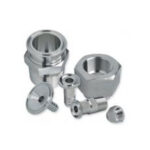 Hose Fittings & Adapters
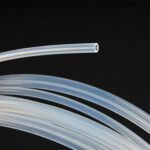 Tubing
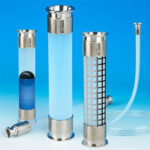 Sight Gauges
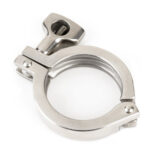 Sanitary Clamps
 Sanitary End Caps
 Compression Control Products
 Pump Replacement Parts
 Carton Filler Replacement Parts
 Sanitary Tube Supports
 Data Center Cooling
 Food Processing Products
 Cheese Processing and the Dairy Industry
 Sanitary Seals & Hoses for the Beverage Industry
 Pet Food Processing Industry
 Craft Beverage Industry Solutions: Gaskets and Hoses
 Cannabis Extraction Equipment
 Pharmaceutical Validation Products
 Getting the Perfect Crimp on a Hose Fitting
 Coding & Labeling Services
 Product & Technical Services
 Packaging & Drop Shipping Services
 Quality Assurance Certification & More
 Literature
 Part Number Library
 Technical Articles/Documents
 Informational Videos and Training
 Product E-Catalogs
 Case Studies – Product Innovations at Work
 Frequently Asked Questions
 Rubber Fab eNewsletter Archive